Most restaurant owners decide to advertise after a slow week. A few bad nights, some empty tables, and suddenly there’s a budget set aside for social media advertising or Google Ads. The problem is that spending without a clear plan rarely fixes a slow week. It just adds a new cost.
Before you put money into any restaurant advertising, you need to ask yourself five honest questions. The answers will either save you from wasting your ad spend or show you exactly where to focus your efforts.
For restaurants aiming to boost their profile, considering restaurant PR Singapore alongside traditional advertising can also be a valuable part of your marketing efforts.
Is Your Restaurant Marketing House in Order?
Paid advertising sends people to your restaurant, your website, or your social media accounts. If those things are not in good shape, you are paying to make a bad first impression. Fix the basics before spending a cent.
Start with your Google Business Profile. Make sure your hours, menu, address, and photos are current. This is free and directly affects local SEO and how nearby potential customers find you. Sloppy listings lose bookings before anyone even clicks an ad.
Check your online reviews too. A strong restaurant marketing strategy has to account for what people say about you publicly. Negative reviews left without a response tell potential customers that no one is paying attention. Encourage customers to leave honest feedback, and reply to everything, good or bad.
Do You Know Who Your Target Audience Actually Is?
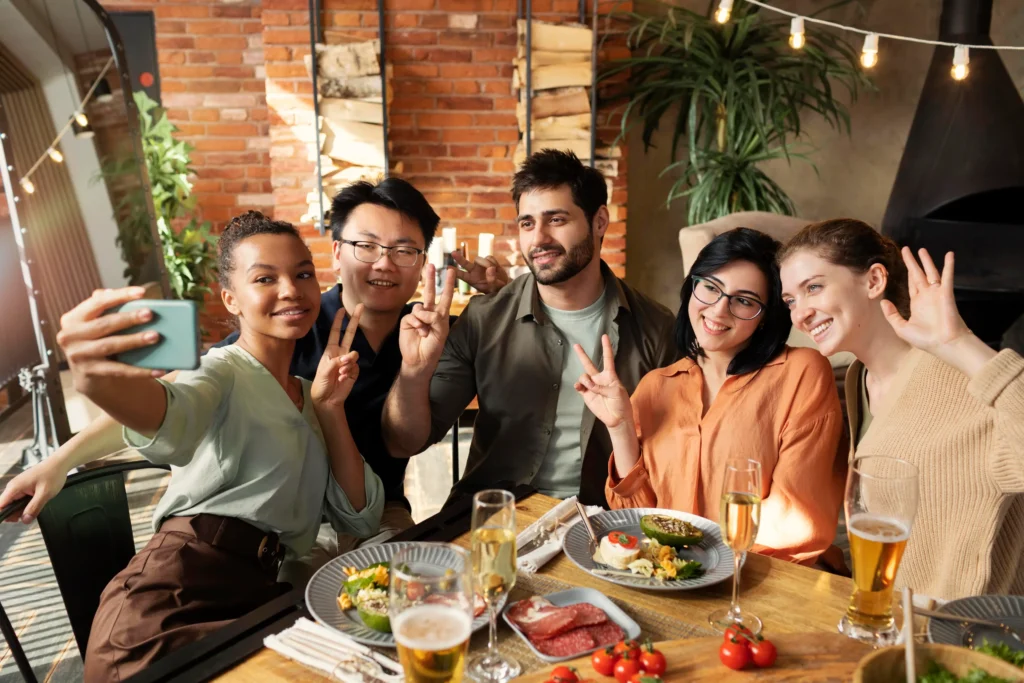
A lot of restaurant social media advertising gets wasted because the targeting is too broad. “People who like food” is not an audience. Knowing your real target audience means knowing their age range, where they live, what they search for, and when they eat out.
Meta Ads and Google Ads both let you get specific. You can target by location, dining preferences, income range, and more. Restaurant marketing ideas that work are built around a real picture of who sits at your tables, not a guess. Pull your data from Google Analytics or your online booking platforms before you build any campaign.
Knowing your audience also shapes what you say in your ads. A lunch crowd of office workers needs a different message than weekend food lovers looking for somewhere new. Social media marketing that speaks directly to one type of person always performs better than a generic message meant for everyone.
Are You Using Social Media Marketing the Right Way for Your Goals?
Social media is not one thing. Organic posts, paid campaigns, user generated content, interactive content, behind the scenes content, and influencer partnerships all serve different purposes. Mixing them up leads to a restaurant marketing approach that looks busy but gets no real results.
If your goal is to increase brand awareness for new restaurants entering a local market, awareness-focused social media advertising on Instagram or Facebook makes sense. If your goal is to fill seats on a Tuesday night, targeted campaigns with exclusive discounts or a time-limited offer will work harder. Match the tool to the job.
Do not ignore search engine marketing either. Local SEO and search engine optimisation help your restaurant online show up when someone nearby searches “best pasta near me.” Paid ads can fill gaps in your organic reach while you build longer-term visibility. Relying solely on one channel is how restaurants end up exposed when that channel shifts.
What Does a Realistic Win Look Like for Local Businesses?

Small and independent restaurant businesses often benchmark their results against large chains. That is not a fair comparison. Local businesses operate with smaller budgets and a tighter local community to reach. Define what a win looks like for your size.
For most restaurants, a win is measurable: more covers on a slow night, better website traffic, higher foot traffic from nearby potential customers, or more online ordering. Set a number before you run any paid advertising so you can tell if it worked. “We got more visibility” is not a measurable result.
Is Your Restaurant Marketing Strategy Playing the Long Game?
One-off campaigns rarely build the customer loyalty that keeps a restaurant open. The most cost effective restaurant marketing ideas combine short-term paid ads with longer-term plays like a loyalty program, community building with local hotels, local charities, or local events, and consistent social media to encourage customers to come back.
Traditional advertising methods like local newspapers still have a place in some local markets, but digital advertising gives you far more control and measurability. Good visual appeal in your food photos and professional photography helps every channel perform better, from your business page to your paid ads. Your visual identity works across all of it.
This is the kind of restaurant marketing strategy that Media Grid helps clients build: not just a campaign for next week, but a proper foundation that supports every bit of ad spend you put in. If you are not sure where to start, start with the questions above.